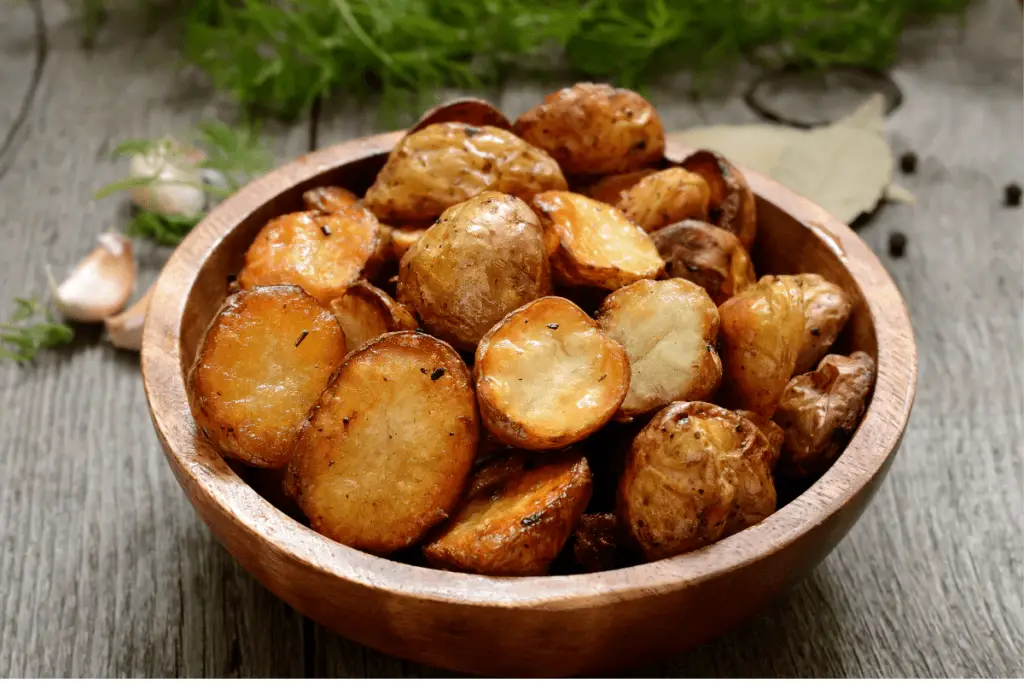
Crispy Roast Potatoes
Course: Sides and ExtrasCuisine: BritishDifficulty: Easy6
servings30
minutes50
minutes340
kcal1
hour20
minutesWho doesn’t like crispy, fluffy, golden brown Roast Potatoes
What You Will Need
Large Roasting Tray
Ingredients
1 1/2 kg King Edward or Maris Piper potatoes
100 g Duck or Goose Fat or 100 ml Good Olive Oil
Sea salt
Directions
- Peel and cut the potatoes into evenly sized pieces. Put the potatoes in a saucepan, cover with cold water,
- Place a lid on and bring to the boil, then turn the heat down to medium and simmer gently (don’t boil) for 10 minutes
- Heat the oven to 200°C, 400°F (180ºC fan) /gas 7).
- Drain the potatoes in a colander and shake well, breaking the surface of the potatoes so they look rough then leave to steam dry for a few minutes.
- Meanwhile, heat the goose fat/oil in a large roasting tin in the oven until very hot.
- Remove the roasting tin from the oven and gently place the potatoes in the hot fat one by one, in a single layer.
- Sprinkle some salt over the potatoes and then turn them in the fat so they are completely coated,
- Place the roasting tin back into the oven and roast the potatoes turning them after 15 minutes, for 30 minutes until they are beginning to turn a golden brown.
- After 30 minutes take out of the oven and with a potato masher gently push down on each potato to break the sides (A quick tip from Jamie Oliver)
- Replace into the oven and roast for another 20/25 minutes or until completely golden brown and crispy
- Remove the baking tray from the oven and take the potatoes out of the fat with a slotted spoon and place them on a sheet of kitchen roll to drain dry.
- Serve.
Buttermilk
Buttermilk
Course: Sides and ExtrasCuisine: not knownDifficulty: Easy225
Ml2
minutes140
kcal30
minutes32
minutesA super alternative if you can’t find Buttermilk on the shelves of your local supermarket.
Ingredients
2 Tbsp Lemon Juice/White Vinegar Freshly Squeezed
225 ml Fresh Milk
Directions
- Measure the milk into a jug
- Add the lemon juice or vinegar into the milk.
- Stir to combine.
- Let it sit for 30 minutes at room temperature until the milk begins to curdle and becomes acidic.
- Use in place of buttermilk in the recipe as it calls for.
- And if you don’t use it straight away store it in the fridge for up to 3 days
Recipe Video
Mise en place

Mise en place
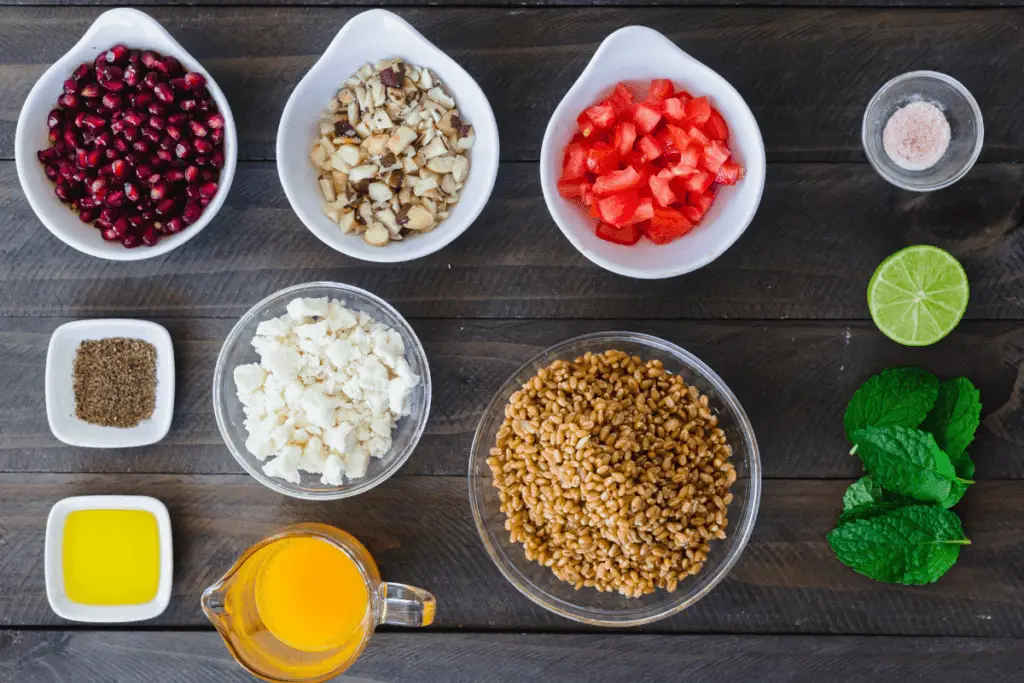
Mise en Place is a term used in professional kitchens for the preparation and organisation of ingredients before cooking.
Poussin

Poussin
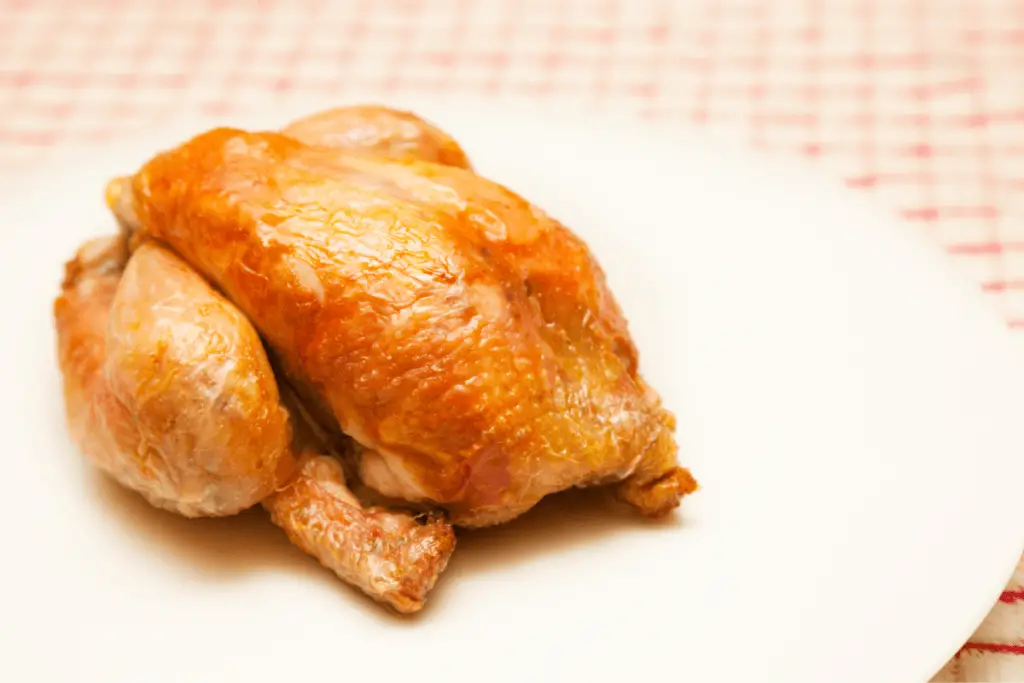
Poussin or coquelet in French cuisine is a young chicken that is less than 28 days old at slaughter.
A Poussin will weigh no more than 750 grams (26 oz), often much less.
It is sometimes also referred to as a spring chicken, but spring chickens are usually slightly larger at 750–850 grams (26–30 oz).
A Poussin would normally be served whole as a portion per person.
Stew

Stew
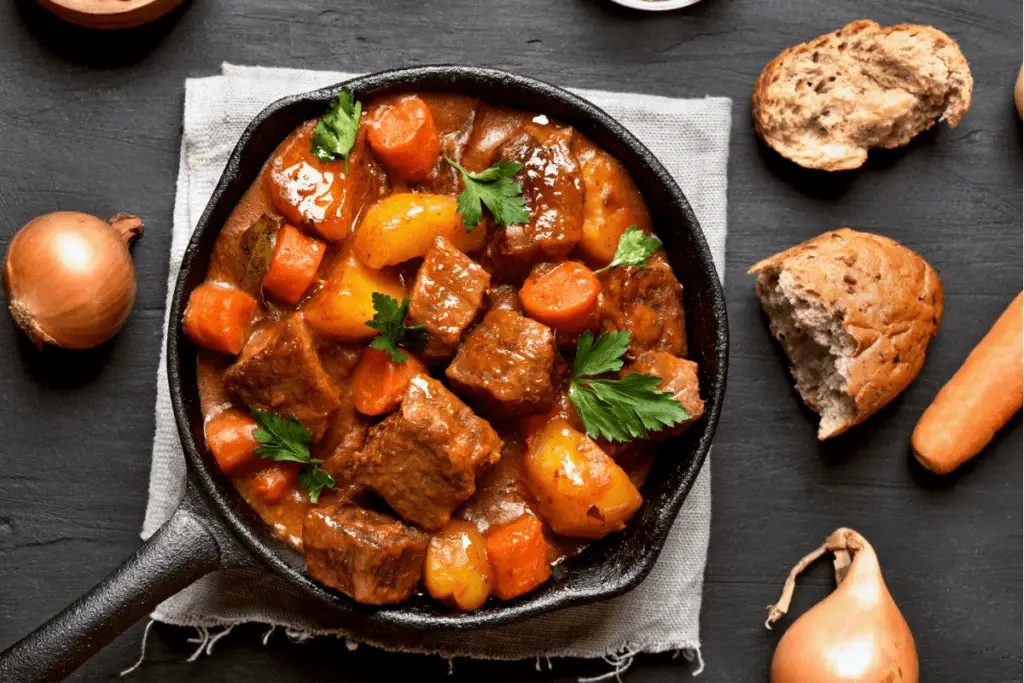
Stewing is cooking a combination of solid food (normally meats and vegetables) in a liquid over a long period of time at a lower temperature, which allows the ingredients to incorporate their flavours and become tender.
Stewing is particularly good when using tougher cuts of meat, the low temperature and long cooking time allows the meat to become tender.
Au Gratin

Au Gratin
Au Gratin In literal terms “To Grate”
But in culinary terms, it can mean to place a dish under the grill to brown off, or to sprinkle with breadcrumbs, or cheese, or a sauce and baked off to a crisp topping whether in the oven or under a grill, especially in a Gratin Dish
Render

Render
To render the fat from food, place the food, normally meat, in a cooking receptacle, either for the oven or stovetop and using a low heat allow the fat to melt away from a food item. This rendered fat can then be used to cook with.
Reduce

Reduce
To reduce a liquid normally through simmering or boiling to intensify the flavour or to thicken the consistency as with Soups or sauces.
Sous-vide

Sous-vide
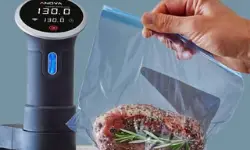
Sous-vide is a French term for ‘under vacuum, also known as low-temperature long time (LTLT) cooking.
It is a method of cooking in which food is placed in a plastic pouch or a glass jar and cooked in a water bath for longer than usual cooking times (usually 1 to 7 hours, up to 48 or more in some cases) at an accurately regulated temperature.
The temperature is much lower than usually used for cooking, typically around 55 to 60 °C (131 to 140 °F) for meat, higher for vegetables. The method is to cook the food evenly, ensuring that the inside is properly cooked without overcooking the outside, and to retain moisture.
Searing

Searing
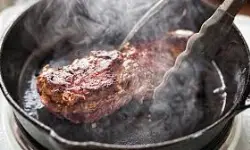
Searing (or pan searing) is a cooking technique, in which the surface of the food (usually meat, poultry or fish) is cooked at a high temperature until a browned crust forms.
Searing is an essential technique in cooking meat for several reasons: The browning creates desirable flavours through the Maillard reaction. The contrast in taste and texture between the crust and the interior makes the food more interesting to the palate. The appearance of the food is usually improved with a well-browned crust.